
 English
 العربية
 Deutsch
 Español
 Français
 हिन्दी
 Bahasa Indonesia
 Italiano
 日本語
日本語 한국어
한국어 Polski
 Português (Brasil)
 Русский
 Türkçe
 Українська
 简体中文
简体中文Micro World
How small is a fibrinogen molecule?
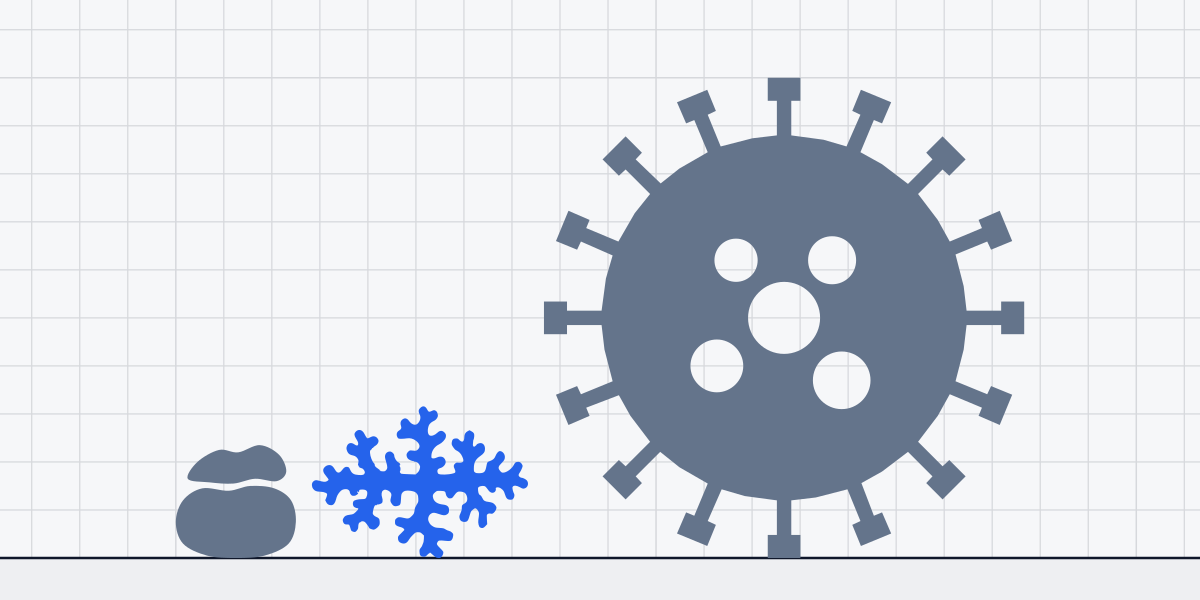
A fibrinogen molecule is about 45 nm long.
What is measured: blood clotting protein, rod length
Compare
How big is that, really?
- About 1.8× the width of a ribosome
- About 2 would fit across a flu virus
- About 23× the width of a DNA double helix
Learn
Facts about Fibrinogen Molecule
Fibrinogen converts into fibrin strands that form the mesh of a blood clot.
Source: PDB: Fibrinogen structure; RCSB Molecule of the Month
Micro World
Compared with other microscopic things
| Name | Size | Compared with Fibrinogen Molecule |
|---|---|---|
| Bacteriophage Phi X174 | 27 nm | 0.6× |
| Qβ Bacteriophage | 28 nm | 0.62× |
| Silver Nanoparticle | 40 nm | 0.89× |
| Fibrinogen Molecule | 45 nm | this page |
| Silicon Nanowire | 50 nm | 1.1× |
| West Nile Virus | 50 nm | 1.1× |
| Human Papillomavirus | 55 nm | 1.2× |
| Cyanophage P-SSP7 | 60 nm | 1.3× |
| Silica Nanoparticle | 100 nm | 2.2× |
| Titanium Dioxide Nanoparticle | 100 nm | 2.2× |
Test your sense of scale
Which is bigger: Fibrinogen Molecule or Human Papillomavirus?
Topics