 English
 العربية
 Deutsch
 Español
 Français
 हिन्दी
 Bahasa Indonesia
 Italiano
 日本語
日本語 한국어
한국어 Polski
 Português (Brasil)
 Русский
 Türkçe
 Українська
 简体中文
简体中文Learn
A typical cup takes about 125 coffee beans
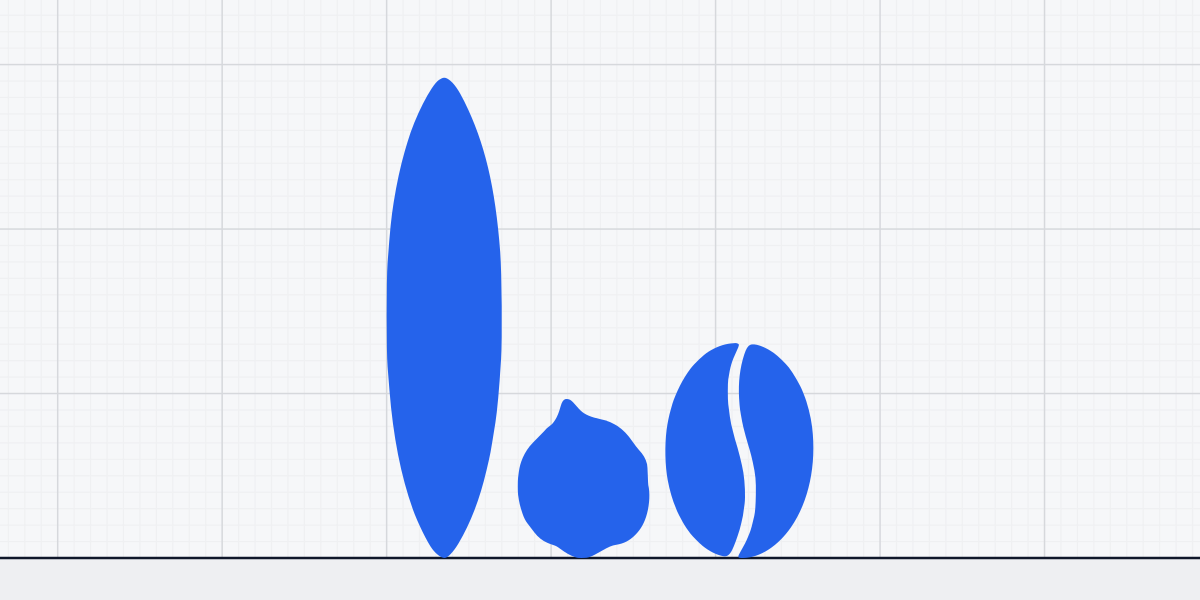
A 250 mL cup of filter coffee made with a 15 g dose works out to about 125 roasted coffee beans. That estimate assumes each roasted bean weighs 0.12 g, so the count comes from the dose on a scale, not from the size of the finished drink.
First, decide what counts as a cup
“Cup” can mean a serving size, a mug, or the amount of brewed coffee in a recipe. For a clear baseline, use a 250 mL filter coffee and a 15 g dose (opens in a new tab), close to the specialty-coffee industry's standard brew ratio. A brewed cup’s volume does not specify how much coffee went into it.
Recipes show how much the dose can change. Starbucks Coffee Japan recommends (opens in a new tab) 10 g of coffee for a 180 mL brewing example. That gives you a concrete recipe to compare with the 15 g example, rather than treating every mug as if it used the same amount of grounds.
The Smithsonian’s account of James Smithson’s coffee break (opens in a new tab) also describes a recipe using roasted beans and water. A separate Smithsonian guide to brewing a better cup (opens in a new tab) discusses how brewing methods and personal taste shape a cup. The bean count starts with the recipe’s dose, not a universal cup measure.
A bean is small, but size is not its weight
A typical roasted coffee bean is 9 mm (0.35 in) long. A chickpea measures 8 mm (0.31 in) across, and a long-grain rice kernel measures 7 mm (0.28 in) tip to tip. These familiar seeds are close in size, so a coffee bean can fit easily among them on a kitchen counter.
A coffee bean is the seed inside a coffee fruit, often called a coffee cherry. Its irregular shape and varying density mean its length alone cannot tell you its mass. For the calculation, use an average roasted-bean mass of about 0.12 g (opens in a new tab), estimated from green Arabica beans weighing roughly 0.13–0.17 g each and then discounted for the 15–18% of mass a bean typically loses during roasting (opens in a new tab). A 9 mm bean is also about 18 times as long as a medium grain of sand, but that comparison still tells you nothing about its weight.
Turn the dose into a bean count
The arithmetic is direct: 15 g of coffee ÷ 0.12 g per bean ≈ 125 beans. The result estimates how many whole roasted beans are represented by the grounds before grinding. It is a count of the beans that went into the brew, not pieces left floating in the finished coffee.
Grinding breaks the beans into particles, and brewing water carries soluble coffee compounds into the drink. The used grounds stay in a filter or brewing basket, where they may also hold water. That is why weighing the coffee before brewing gives a more useful count than trying to inspect the finished cup.
Why your cup may use more or fewer
Change the dose while keeping the assumed 0.12 g per bean. A 10 g dose works out to about 83 beans, while an 18 g dose works out to about 150 beans. A coffee bean is about 1.5 times as long as a grain of rice.
The average mass of each bean changes the result, too. For a 15 g dose, an average of 0.10 g per bean gives about 150 beans; an average of 0.15 g per bean gives about 100 beans. The higher the average mass per bean, the fewer beans make up the same dose.
A scoop can conceal that difference because it measures volume, while a scale measures mass. Whole beans settle with gaps between them, and their shapes and sizes vary. Smithsonian’s discussion of brewing methods and personal taste puts recipe variation in context: people can choose different ways to make a cup, not just different mug sizes.
Get the count for your own coffee
You can replace the assumed average with a measurement from the coffee you actually use. Count 20 whole beans and weigh them together. Divide the sample’s mass by 20 to find the average mass of one bean. Keep the sample and your usual brewing dose in grams so the units match.
Then weigh the dose you normally brew and divide it by that average bean mass. For example, if your coffee averages 0.12 g per bean and your usual dose is 15 g, the calculation gives about 125 beans. Try the same method with another bag and the count may change. For more estimation tips, start with the quantity you can measure. Divide your usual dose by the average mass of your beans, and you have a count for your own brew.
Related sizes
Things this article is about, with their sizes.
Sources
- Starbucks Coffee Japan: コーヒー豆10gの量り方は? (opens in a new tab) starbucks.co.jp
- Smithsonian Libraries and Archives, Smithsonian Magazine: A Coffee Break With James Smithson (opens in a new tab) smithsonianmag.com
- Smithsonian Magazine: The Founder of the Smithsonian Institution Figured Out How to Brew a Better Cup of Coffee (opens in a new tab) smithsonianmag.com
- National Science Teaching Association: The Science of Coffee (opens in a new tab) nsta.org
- USDA FoodData Central, “Chickpeas, mature seeds, cooked”; Encyclopaedia Britannica, “Chickpea”
- Encyclopaedia Britannica, “Rice”; USDA FoodData Central, “Rice, white, long-grain, regular, raw”
- Specialty Coffee Association: SCA Standard 310-2021, Home Coffee Brewers — Specifications and Test Methods (PDF hosted via CoffeeGeek) (opens in a new tab) coffeegeek.com
- Wale Mengistu, International Journal of Agronomy (Wiley): Physical and Cup Quality Attributes of Arabica Coffee Varieties Grown in Highlands of Amhara Region, Northwestern Ethiopia (opens in a new tab) onlinelibrary.wiley.com
- MTPak Coffee: Coffee roasting — how and why it causes coffee to lose weight (opens in a new tab) mtpak.coffee