 English
 العربية
 Deutsch
 Español
 Français
 हिन्दी
 Bahasa Indonesia
 Italiano
 日本語
日本語 한국어
한국어 Polski
 Português (Brasil)
 Русский
 Türkçe
 Українська
 简体中文
简体中文Learn
Why do competition pumpkins grow so big?
Competition pumpkins grow so big because growers choose seeds for exceptional fruit size, then direct the vine’s growth toward a chosen pumpkin. At peak, a record-setting pumpkin can gain about 24 kg (52 lb) in a day, according to the University of New Hampshire Extension (opens in a new tab).
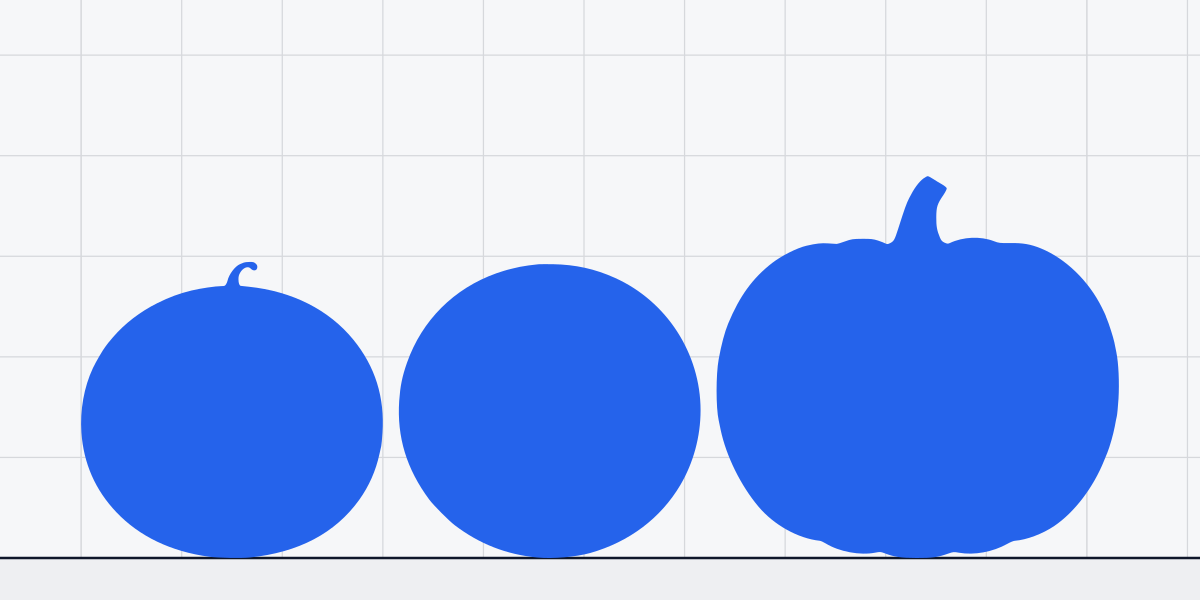
A typical carving pumpkin is about 40 cm (1.3 ft) across. A medium pizza is 30 cm (12 in) wide, and a watermelon is about 30 cm (12 in) wide. Competition growers start with familiar produce, then create conditions for one pumpkin to grow far beyond the size of an ordinary kitchen crop (opens in a new tab).
The starting point: a pumpkin bred for size
Growers do not start with an ordinary carving-pumpkin seed and hope for a lucky outlier. They choose varieties whose family lines have been selected for exceptional fruit size. Atlantic Giant is a familiar variety among competition growers. The Oregon State University Extension guide to giant pumpkins (opens in a new tab) describes genetics as a key part of growing a giant.
Those inherited traits raise the plant’s potential, but they do not guarantee a huge fruit. A seed cannot make leaves, take up water or shield a pumpkin from damage. Poor conditions can leave a giant-variety plant with an unremarkable fruit. The grower’s task is to give the plant room and care to reach the potential its genetics allow.
A practical choice is where to let the vine run. Oregon State University Extension emphasizes growing space alongside genetics and water. Growers reserve an open patch and plan a route for the main vine, so leaves can spread without runners crossing a path or being trampled during tending. They guide the stem along that route and leave the developing fruit on clear ground, where it can enlarge without pressing against a fence, a rock or another hard obstacle. They also leave access to the plant, so they can inspect leaves, adjust vines and reach the soil without stepping among the foliage. A 40 cm pumpkin is about 1.3 times the length of a 30 cm ruler; a competition fruit eventually needs far more clearance. An open layout also reduces the chance that a person catches a runner or brushes the fruit, damaging the plant as it grows.
The distinction from a doorstep pumpkin is the goal. An ordinary food and drink crop is valued for its familiar shape and use. A competition grower wants the plant to support a fruit that keeps swelling, with its rind stretching around more flesh as the season advances.
One fruit gets the vine’s resources
A pumpkin vine can set several fruits, and each growing fruit draws on the sugars and water the plant can deliver. Competition growers commonly keep a single pumpkin per plant (opens in a new tab), choosing a promising young fruit and removing the others. Pruning and managing the vine are part of the care described in the Oregon State University Extension guide.
Growers also trim or guide side growth so the plant’s expanding stems do not become tangled or take over the space reserved for the selected pumpkin. Pruning does not turn the vine into a simple pipe feeding the fruit. The plant still needs healthy leaves to make sugars, and its roots must keep taking up water and nutrients. Trimming manages competing growth; it cannot replace a vigorous plant.
The selected pumpkin needs room to expand while it stays connected to the vine. Growers position it so it is not wedged against a hard surface, and keep nearby stems from pulling tight as the fruit swells. A crowded vine can make tending awkward, while pressure on the growing fruit can strain the stem or rind. The grower is managing the plant’s shape as well as the pumpkin’s.
Leaves make the supply; water helps the fruit expand
Leaves capture light and make sugars that travel through the vine to growing tissues. Roots supply water and mineral nutrients from the soil; the plant carries those materials to the developing pumpkin. Its cells divide and enlarge, and water entering them contributes much of the fruit’s increasing mass.
That is why “give it more water” is not a full explanation. Water cannot build a huge fruit on its own: the plant needs healthy leaf area to make sugars, and roots must supply water without leaving the soil waterlogged. A dry spell can slow growth, while damaged leaves reduce the plant’s ability to feed the fruit. Growers aim to keep this supply system working together.
Pumpkins are botanically fruits, though gardeners often group their vines with fruiting vegetables such as squash and cucumbers. The orange color of a pumpkin comes mainly from carotenoid pigments. Watermelon flesh, by comparison, is more than 90 percent water by weight. A giant pumpkin’s growth depends on the whole plant supplying the developing fruit, not simply on adding water to the soil.
Why growth can approach 24 kg a day
That near-peak pace belongs to the plant’s strongest stretch of growth, not the whole season. A broad canopy of healthy leaves can make sugars while roots draw up water and nutrients; favorable warmth helps those processes continue. As fruit cells enlarge, water entering them adds mass quickly, and the rind has to stretch around the growing interior. The fruit is living tissue, not a hollow shell being inflated.
The growing window is limited. The plant has to keep its leaves healthy and its roots working as conditions change, and the fruit must expand without splitting. A damaged leaf or stressed vine can interrupt the supply to the pumpkin. Growers watch for trouble and avoid disturbing the connection between the vine and the swelling fruit, because a heavy pumpkin still depends on that living link.
Care also means keeping the fruit and its supporting stems clear of avoidable knocks. A runner caught underfoot can be bruised or broken; a pumpkin pressed against an obstacle can rub as its surface expands. The grower’s open layout and vine management help reduce those risks while leaving the leaves room to work.
A huge pumpkin is still racing a clock
The plant has to make its growth before the season ends. Weather can shift, leaves can lose health, and the vine has a finite capacity to supply the fruit. The pumpkin itself has a structural limit: its rind must keep stretching around a growing mass without splitting. A crack exposes the flesh and can end a competition run.
Researchers at Georgia Tech have examined giant-pumpkin shape and mechanical strain as the fruit grows, in research on pumpkin growth and strain (opens in a new tab). The rind has to keep stretching around a mass the vine is still adding to.
Related sizes
Things this article is about, with their sizes.
Sources
- University of New Hampshire Extension: It’s the Great—No, Make That the Greatest—Pumpkin (opens in a new tab) extension.unh.edu
- Oregon State University Extension Service: How to grow a giant pumpkin: OSU expert shares tips (opens in a new tab) extension.oregonstate.edu
- Georgia Institute of Technology: [PDF; page title not available in search result] (opens in a new tab) hu.gatech.edu
- Encyclopaedia Britannica, Pumpkin; University of Illinois Extension, Pumpkins
- Encyclopaedia Britannica, Watermelon; USDA FoodData Central, Watermelon
- UNESCO, “The Art of Neapolitan ‘Pizzaiuolo’”; Encyclopaedia Britannica, “Pizza”
- Guinness World Records: Heaviest pumpkin (opens in a new tab) guinnessworldrecords.com